
Find Virginia Recent Arrests Online
Virginia recent arrests are tracked by city police, county sheriffs, and the State Police. Each agency keeps its own log of new bookings. Most jails post a daily roster. The Virginia Judiciary case system shows new charges in the courts. You can search by name, by date, or by county. This page shows you where to look. We list the main state tools for Virginia recent arrests, then point you to county and city pages for local booking info. Use the search tool below to start a fast public records check.
Virginia Recent Arrests Overview
Where Virginia Recent Arrests Live
Virginia is split into 95 counties and 40 independent cities. Each one has its own police or sheriff's office that books new arrestees. The arrest record starts at the local level. The arresting agency holds the booking sheet, the mugshot, and the charge list. From there, the case moves to the general district court or the circuit court. The Virginia State Police roll all of this up into a central file. So Virginia recent arrests show up in three places at once: the local jail, the local court, and the state repository.
The state repository is run by the Virginia State Police CARE section. CARE stands for Civil and Applicant Records Exchange. It is the central hub for Virginia criminal history. The Central Criminal Records Exchange, or CCRE, pulls in data from every law enforcement agency in the state. CARE handles over 560,000 record check requests each year. The unit is set up under Va. Code § 19.2-389, which sets the rules for who can access criminal history info and how.
For Virginia recent arrests, the State Police CARE system is the broadest tool, but it is name-based and not always free. The local jail roster is faster for new bookings. The court case system is best for charge details and hearing dates. We cover all three below.
The CARE page lists every form you might need for a Virginia name-based check. SP-167 is the standard form. It costs $15 and needs a notary. SP-230 is for certain authorized agencies and runs $29. The State Police partnered with NotaryCam for online notary access, which makes the SP-167 simple to file from home.
Virginia Courts Online Case Info
The fastest free way to track Virginia recent arrests in court is the state judiciary's case info system. The Virginia Judiciary case information portal shows new criminal and traffic cases for general district courts, juvenile and domestic relations courts, and select circuit courts. You can search by name, case number, or hearing date. The OCIS 2.0 statewide tool lets you check every county at once. That helps when you don't know where the arrest took place.
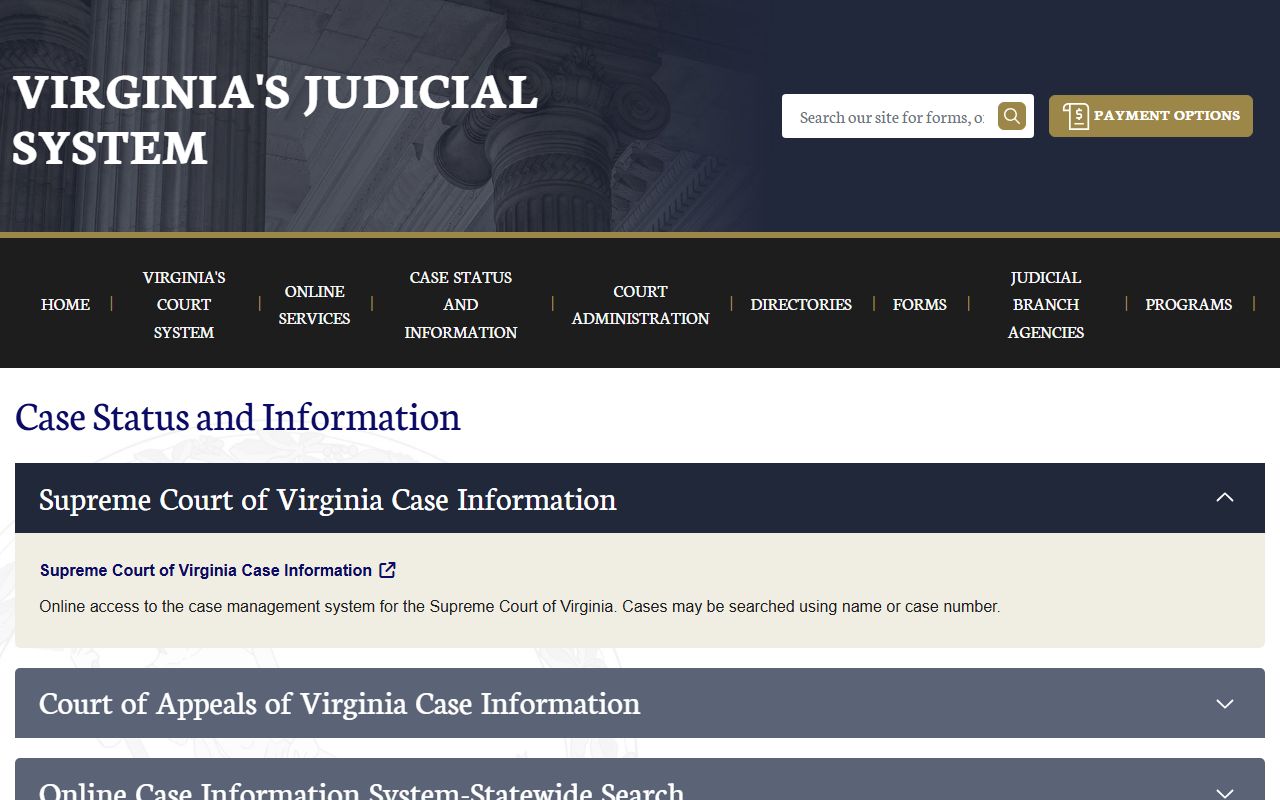
The case info site is free to use. Court clerks load case data into their case management system, and the Office of the Executive Secretary of the Supreme Court of Virginia keeps the tech running. Some data lags by a day or two. New arrests show up after the magistrate sets the initial bond and the case is keyed in.
You can also sign up for the Case Alert Subscription System, or CASS. CASS sends a text or email when a case you watch has a new docket entry. It is a great free tool for tracking Virginia recent arrests on a specific person. The Virginia Date of Birth Confirmation system, or VDBC, lets approved businesses confirm a date of birth tied to a case, but it needs an SCC ID and a paid subscription.
Note: The judiciary site shows live case info but does not show booking photos or jail location details, so use the local sheriff site for those.
Public Records Law and Recent Arrests
Virginia has a strong open records law. The Virginia Freedom of Information Advisory Council oversees the Virginia Freedom of Information Act. The full law sits at Va. Code §§ 2.2-3700 through 2.2-3714. Under this law, all public records are presumed open. An agency can only hold back a record if a clear statute lets them. That is the baseline rule for Virginia recent arrests.
The key statute for arrest data is Va. Code § 2.2-3706. This section says criminal incident info on felony offenses must be open to any citizen of the Commonwealth. That covers adult arrest records, booking info, and incident reports. So the law is on your side when you ask a Virginia agency for a recent arrest log.
That said, not every record is open. The same § 2.2-3706 lists items the agency can keep back. Juvenile arrest records are sealed under § 16.1-301. Records that would tip off a target in an open case can stay closed. Witness names and victim info can be cut. Mental health notes are out. So when you make a Virginia recent arrests request, you may get a clean booking sheet with some fields blacked out.
The FOIA Council can be reached at (804) 698-1810. They sit at 910 Capitol Street in Richmond. Agencies must reply to a FOIA request within five working days. The first two hours of search time are free. After that, the agency may charge for staff time at the rate of the lowest-level worker who can do the search. Most local sheriffs in Virginia waive small fees for routine arrest log requests.
Statewide Arrest Record Databases
Outside the official state tools, a few third-party sites pull together Virginia recent arrests from many counties at once. These sites can be a good first stop when you want to see what is out there. Virginia.arrests.org is one of the most used. It builds a feed from county sheriff sites, jail rosters, and the State Police CARE data. You can search by name, by county, by date, or by charge type.
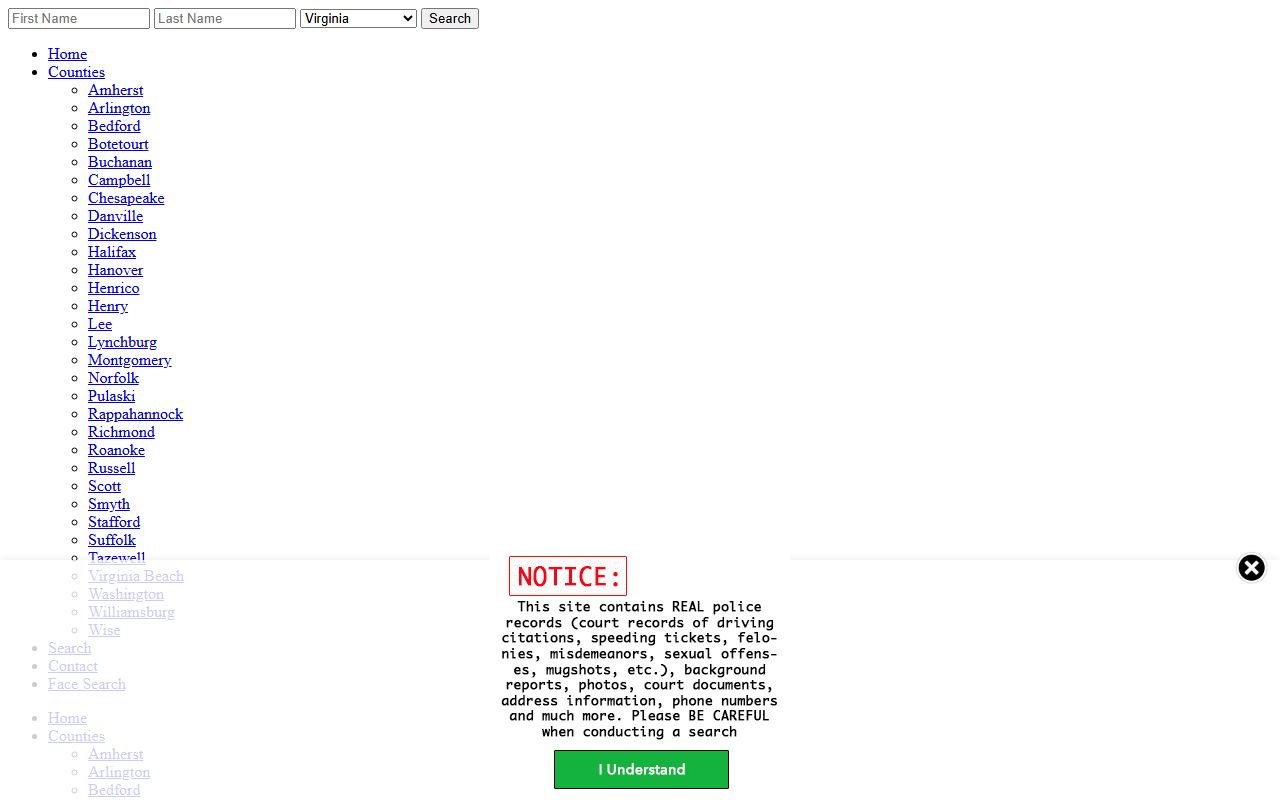
The site shows mugshots, booking dates, charges, bond amounts, and the arresting agency. Free basic search works for most names. Some deep reports cost a fee. Always check info found here against the official county or court source before you act on it. Third-party feeds can lag, and a person listed may not have been convicted of the listed charge.
This site is unofficial. It pulls from public sources but it is not run by the state. Use it to spot a record fast, then go to the official county sheriff or to the Virginia Judiciary case system to confirm details and get certified copies.
Virginia Inmate Locator
If a recent arrest in Virginia led to a state prison stay, the person is no longer in a county jail. They are in a Virginia Department of Corrections facility. To find them, use the VADOC inmate locator. The tool needs at least the person's name. Filters let you narrow by sex, race, age, and ID number.
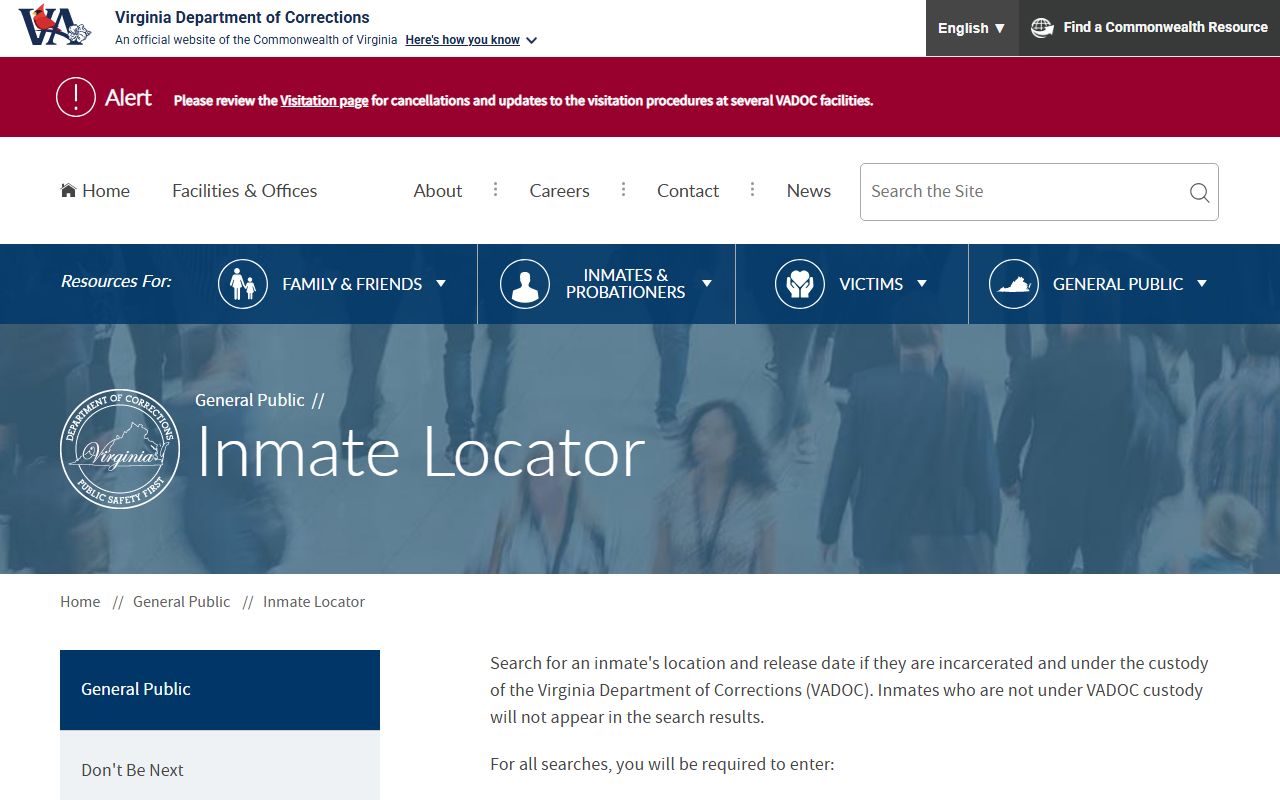
VADOC supervises about 30,000 inmates. The locator shows the housing facility, the projected release date, and the active sentence. It does not cover county jails or federal custody. For county jail info, use the local sheriff's roster on the right county page. For federal custody, use the federal Bureau of Prisons inmate finder.
The VADOC main number is (804) 674-3000. The mailing address is P.O. Box 26963, Richmond, VA 23261. Requests for inmate records can be made by phone, by mail, or in person. Under Va. Code §§ 2.2-3700 through 2.2-3714, VADOC may charge for the actual cost of searching and copying records.
Sex Offender Registry Search
Virginia keeps a public sex offender registry. It is run by the State Police. Visit the Virginia Sex Offender Registry to search by name, address, city, county, or zip code. The site shows the photo, address, and conviction info for each listed person. Tier I is low risk. Tier II is moderate. Tier III is high risk and faces the most strict rules.
This is not a list of recent arrests. It is a list of past convictions for sex offenses. But many people use it as part of a broader Virginia recent arrests check. The registry also offers free email alerts. You can list up to three addresses for monitoring and get an alert when a new offender moves into your area.
Use of the registry is bound by state law. You cannot use the data to threaten or harass anyone listed. Misuse is itself a crime in Virginia.
Crime in Virginia Annual Report
The Virginia State Police puts out an annual report called Crime in Virginia. It pulls together arrest and offense data from every county and city in the state. In 2020, Virginia made over 206,000 arrests, per the report. The data is built on the FBI's National Incident-Based Reporting System, or NIBRS, which captures more detail than the older UCR format.
The report covers violent crime like murder, rape, robbery, and aggravated assault, plus property crime like burglary, larceny, and motor vehicle theft. It breaks down arrestees by age, gender, and race. You can use it to see trends in your county over time. The State Police also runs an interactive Crime Data Portal so you can build your own queries.
The Department of Criminal Justice Services Statistical Analysis Center publishes deeper crime studies at dcjs.virginia.gov. They cover topics like domestic violence, drug arrests, hate crimes, and recidivism, with data going back many decades.
Note: Crime in Virginia totals lag the current year by 12 to 18 months, so use the local jail rosters for fresh recent arrests.
Code of Virginia Arrest Laws
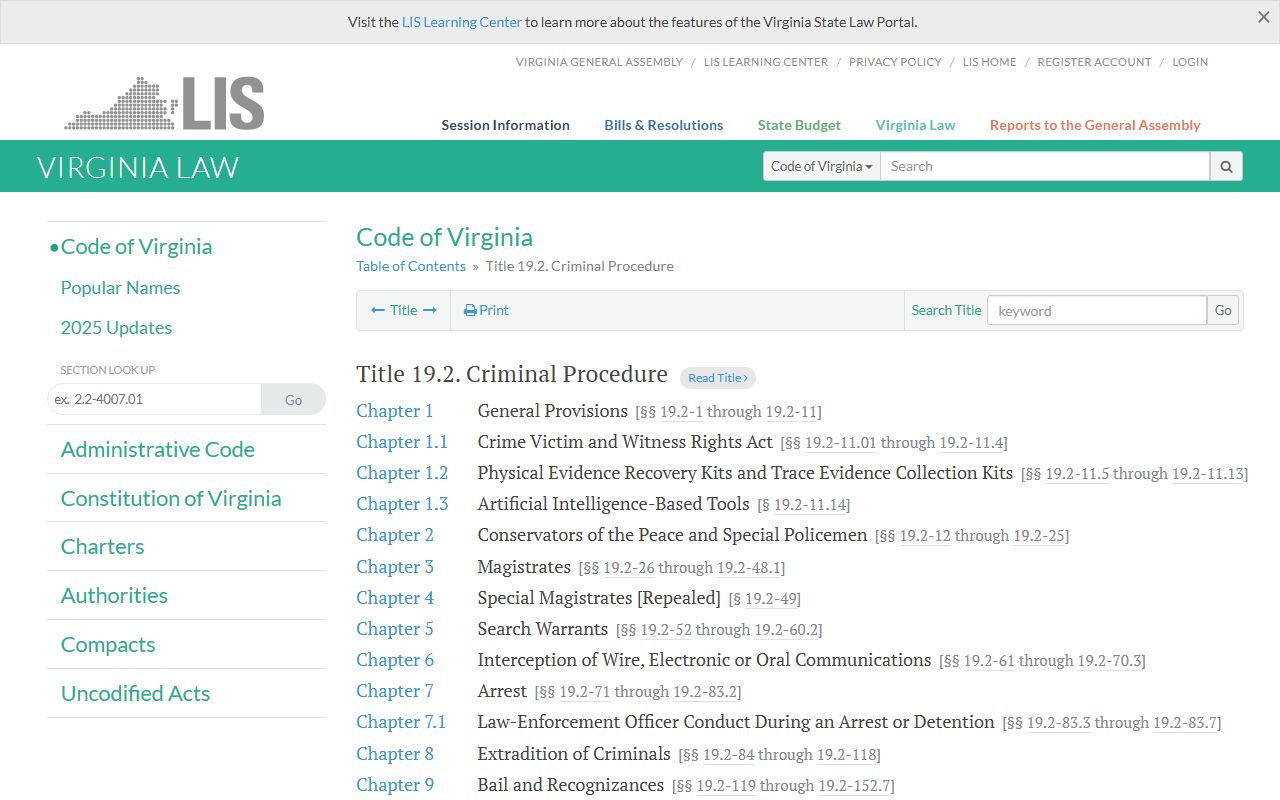
The full set of Virginia arrest laws lives in Title 19.2 of the Code of Virginia. This title covers criminal procedure from the warrant stage through trial and sentencing. Va. Code §§ 19.2-71 through 19.2-76 set the rules for arrest warrants. Any magistrate may issue a warrant on a sworn complaint that a felony or misdemeanor took place. The warrant must name the accused and list the charge.
For records access, the key law is again § 19.2-389. It sets the rules for sharing criminal history. Va. Code §§ 19.2-392.2 through 19.2-392.6 cover expungement. People who were found not guilty, had their case dismissed, or got a full pardon can ask for their arrest record to be sealed. The expungement petition is filed in the circuit court of the area where the case was heard. The fee is around $86. The Commonwealth's Attorney must be served with the petition.
The Virginia Judiciary expungement page has step-by-step guides and forms. Once the court grants the order, the State Police pulls the record from CCRE. So a properly expunged Virginia recent arrest will drop out of the state file.
Library of Virginia Records
For older arrest records, the Library of Virginia is the place to go. It sits at 800 East Broad Street in Richmond. The library holds county court records going back to the 1600s, state penitentiary files, governor's papers, and criminal court case files. These are not the right tool for Virginia recent arrests, but they help if you need to trace a case from years ago.

The library gives free public access. You can use Ancestry, HeritageQuest, LexisNexis, and Westlaw on site. Many local Virginia public libraries also offer digital access to court records and vital statistics indexes. The Archives Research Room is open Monday through Saturday, with staff on hand to help you find what you need.
The library is also the official keeper of state agency records that must be saved long term. Records management staff work with state offices on document retention rules under the Virginia Public Records Act.
Project CRIS and Rap Back
The State Police runs a system called Project CRIS, short for Criminal and Rap Back Information System. It is the back-end engine for criminal record checks in Virginia. Visit the Project CRIS page for tech details. The system links to the FBI's Rap Back service, which sends an alert to a hiring agency when a worker in a sensitive role gets a new arrest.
The system handles over 560,000 record check requests per year. CARE has partnered with DocuSign for online record release and payment, and with NotaryCam for online notary on the SP-167 form. Project CRIS rolled in to cut wait times for record checks and to clean up data quality across the state.
Project CRIS rolled in to cut wait times for record checks and to clean up data quality. The system meets FBI security rules and keeps an audit trail of every record access.
Browse Virginia Recent Arrests by County
Each Virginia county runs its own sheriff's office and jail. Pick a county below to find the local arrest log, jail roster, and court case info.
Major Virginia Cities Recent Arrests
Virginia has 40 independent cities, each with its own police department and jail. Pick a city below to find local booking info.